Evaluating Funky Meatloaf: A Bold, Distressed Display Font for Creative Projects
In the expansive world of digital typography, selecting the right typeface is often the most critical design decision a creator makes. Among the myriad options available for display purposes, Funky Meatloaf has emerged as a distinctive choice for designers seeking character and impact. This bold and distressed font is characterized by its soft rounded edges and a textured, vintage aesthetic that immediately draws the eye. Understanding where this specific typeface fits within a broader design strategy requires looking beyond its visual appeal to its practical applications, limitations, and technical considerations.
Defining the Aesthetic of Funky Meatloaf
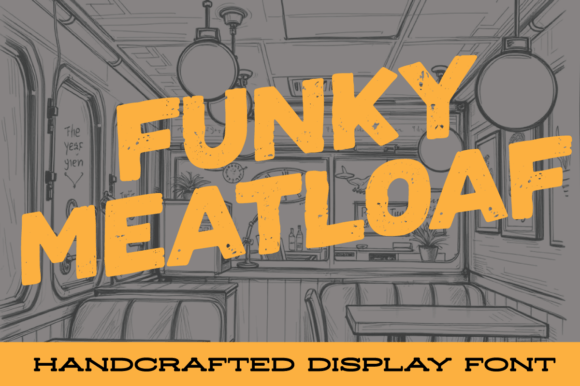
Funky Meatloaf is best categorized as a display font with strong retro influences. Its primary visual identifiers are its heavy weight, irregular distressing, and approachable, rounded terminals. Unlike geometric sans-serifs that prioritize neutrality and clarity, or sharp serif fonts that convey tradition and formality, this typeface leans into imperfection. The distressed texture gives it a worn, hand-printed feel, reminiscent of mid-century signage, old concert posters, or vintage packaging.
The "soft rounded edges" mentioned in its description are crucial to its personality. They prevent the bold weight from feeling aggressive or industrial. Instead, the roundness introduces a sense of playfulness and warmth. This combination of heaviness and softness creates a unique tonal balance: it is loud enough to command attention but friendly enough to remain inviting. For designers evaluating this font, recognizing this duality is essential. It is not merely a "bold" font; it is a "bold yet approachable" font.
Ideal Use Cases and Strategic Applications
When determining whether Funky Meatloaf aligns with your project goals, consider the context in which the text will appear. This typeface excels in situations where the primary objective is to capture immediate attention while establishing a casual, fun, or nostalgic mood. Here are several scenarios where it serves as a strong fit:
- Event Promotions: For party invitations, music festival flyers, or community event posters, the font’s energetic vibe communicates excitement without appearing corporate. It works particularly well for themes involving retro decades, such as the 70s or 80s.
- Brand Identity for Casual Businesses: Cafes, food trucks, boutique shops, and creative agencies often benefit from typography that feels human and handmade. Funky Meatloaf can serve as an effective logo type or header font for brands wanting to appear accessible and unconventional.
- Social Media Graphics: In digital environments where users scroll quickly, high-contrast, textured fonts stop the eye. Using this font for short, punchy headlines on Instagram or Pinterest can increase engagement rates for lifestyle or entertainment content.
- Packaging Design: For products that want to emphasize artisanal quality or retro charm—such as craft sodas, organic snacks, or handmade goods—the distressed texture adds a layer of authenticity that clean vectors cannot replicate.
Tradeoffs and Technical Considerations
While Funky Meatloaf offers significant stylistic benefits, it is not a universal solution. Every design tool involves tradeoffs, and understanding the limitations of this font is vital for professional execution. The most notable constraint is readability. The distressed texture and irregular shapes that give the font its character also reduce legibility, especially at smaller sizes or over long passages of text.
Designers should avoid using Funky Meatloaf for body copy, legal disclaimers, or any content requiring sustained reading. It is strictly a display font. Attempting to use it for paragraphs will result in visual fatigue for the reader and a cluttered appearance for the design. Furthermore, the distressed effect may not render consistently across all output mediums. On high-resolution screens, the texture looks intentional and artistic. However, on low-quality prints or small mobile screens, the distressing might appear as noise or pixelation, detracting from the overall polish.
Another consideration is pairing. Because Funky Meatloaf is so dominant visually, it requires a subdued companion font. Pairing it with another decorative or bold font will create visual conflict. Instead, it pairs best with clean, neutral sans-serifs or simple serifs that provide structural stability without competing for attention. The goal is to let Funky Meatloaf be the star while the supporting text handles the informational heavy lifting.
Comparing Alternatives: When to Look Elsewhere
To make an informed decision, it is helpful to compare Funky Meatloaf against other typographic categories. If your project requires a sense of luxury, elegance, or high-end sophistication, this font is likely unsuitable. Its playful, distressed nature contradicts the precision associated with luxury branding. In such cases, a high-contrast serif or a minimalist geometric sans-serif would be more appropriate.
Similarly, if the design needs to convey urgency, danger, or strict professionalism—such as in financial reports, medical documentation, or security signage—the softness and whimsy of Funky Meatloaf undermine the necessary tone. Here, a stark, unadorned typeface like Helvetica or Arial remains the standard for good reason.
Additionally, consider the trend lifecycle. Distressed, vintage-style fonts have been popular for several years. While Funky Meatloaf is timeless in its retro reference, overly trendy executions can date a design quickly. If longevity is a primary concern, ensure that the rest of the design elements are classic enough to balance the font’s stylistic specificity. Alternatively, if you need a cleaner look with similar weight, a solid slab serif might offer the same impact without the texture-related readability issues.
Practical Decision-Making Insights
When evaluating Funky Meatloaf for your next project, ask yourself three key questions. First, does the message require a casual, fun, or nostalgic tone? If the answer is yes, this font is a strong candidate. Second, will the text be viewed primarily at large sizes? Since it is a display font, it must be given space to breathe. Third, does the medium support textured rendering? Ensure that your print or digital platform can handle the nuances of the distressed effect without losing clarity.
It is also advisable to test the font in situ. Create mockups of your poster, invite, or logo using Funky Meatloaf alongside potential pairing fonts. View these mockups at actual size and from a distance. Does the text remain legible? Does the texture enhance or distract from the message? This practical testing phase is often more revealing than theoretical analysis.
Ultimately, Funky Meatloaf is a specialized tool in the designer’s toolkit. It is not meant for every job, but for the right job, it is exceptionally effective. By respecting its limitations regarding readability and context, and by leveraging its strengths in creating bold, friendly, and vintage-inspired visuals, designers can use this font to create memorable and engaging work. Whether for a weekend party invite or a brand refresh for a creative studio, understanding the nuanced personality of Funky Meatloaf ensures that your typographic choices support your broader communication goals.