Coconut Delight: A Practical Evaluation of a Playful Handwritten Display Font
In the crowded landscape of digital typography, finding a font that balances legibility with genuine personality is often a challenge. Coconut Delight enters this space as a handwritten display typeface designed to inject charm and warmth into visual communications. Unlike rigid geometric sans-serifs or overly ornate scripts, this font aims for a middle ground where approachability meets design intent. For professionals ranging from wedding planners to small business owners, selecting the right typographic voice is critical; it sets the emotional tone before a single word is read. This evaluation examines the practical utility, aesthetic characteristics, and real-world application of Coconut Delight to determine its value in a professional workflow.
Aesthetic Characteristics and Design Intent
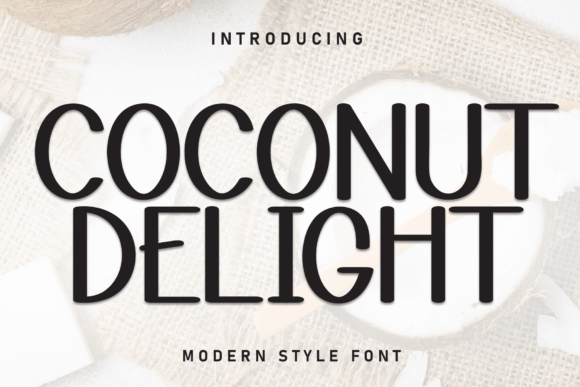
The defining feature of Coconut Delight is its simulation of natural handwriting. It possesses an irregular rhythm and varying stroke weights that mimic the fluidity of a pen moving across paper. This "imperfect" quality is intentional; it avoids the sterile uniformity of computer-generated text, offering instead a human touch that feels amiable and inviting. The letterforms are rounded and open, contributing to an adorable and playful vibe without sacrificing readability at larger sizes.
From a design perspective, the font excels in creating a sense of whimsy. The curves are soft, and the transitions between strokes feel organic rather than mechanical. This makes it particularly effective for projects requiring a lighthearted or nostalgic atmosphere. However, because it is categorized as a display font, its primary strength lies in headlines, short phrases, and decorative elements rather than dense blocks of body text. The character set includes standard uppercase and lowercase letters, numbers, and essential punctuation, though users should verify the inclusion of specific ligatures or alternate glyphs depending on their licensing version.
Performance in Real-World Applications
To understand the true value of Coconut Delight, one must look beyond static samples and consider how it performs in actual design scenarios. Its most obvious use case is in the wedding industry. Wedding invitations often require a blend of elegance and personal sentiment. Coconut Delight serves well here, particularly for couple names, dates, or thematic headers like "Save the Date." The font's friendly nature complements floral arrangements and pastel color palettes commonly found in modern wedding stationery.
Beyond weddings, the font finds significant utility in the greeting card market. Endearing cards for birthdays, baby showers, or holidays benefit from the font's joyful energy. When paired with simple illustrations or watercolor textures, Coconut Delight enhances the overall narrative of celebration and affection. For marketers and content creators, this font can be a powerful tool for social media graphics, blog post headers, or email subject lines where standing out in a feed is paramount. It breaks the monotony of standard corporate fonts and signals to the audience that the content is crafted with care.
Usability and Technical Considerations
When integrating Coconut Delight into a project, usability is a key factor. Most modern design software, including Adobe Illustrator, Photoshop, and InDesign, handles variable-width script fonts reasonably well. However, designers should remain vigilant regarding kerning. Because the font mimics handwriting, automatic spacing algorithms may not always produce the desired result. Manual adjustment of letter spacing is often necessary to ensure that the flow of the text looks natural and not disjointed. This requires a bit more time investment during the layout phase but ultimately results in a more polished final product.
Legibility is another crucial consideration. While Coconut Delight is charming, its decorative nature means it loses clarity when scaled down significantly. It is not recommended for body copy, footnotes, or any text smaller than 14 points on screen or print. Attempting to use it for long paragraphs will likely strain the reader's eyes and diminish the professional quality of the document. Instead, it should be reserved for titles, pull quotes, and accent text where its personality can shine without compromising readability.
Strengths and Limitations
The strengths of Coconut Delight are clear: it offers immediate emotional resonance and versatility within its niche. It is highly effective at conveying warmth, friendliness, and creativity. For brands positioning themselves as approachable, artisanal, or community-focused, this font aligns perfectly with brand identity goals. Its flexibility allows it to adapt to various contexts, from a boutique bakery's menu to a children's book cover.
However, there are limitations to acknowledge. The font's playful nature restricts its suitability for formal or serious contexts. It would be inappropriate for legal documents, financial reports, or corporate annual statements where authority and neutrality are required. Additionally, while the font is visually appealing, overuse can lead to visual fatigue. Just as too much sugar overwhelms a palate, excessive use of a whimsical font can make a design feel cluttered or juvenile. Professional restraint is essential; using Coconut Delight sparingly ensures it remains a highlight rather than a distraction.
Who Benefits Most from This Typeface?
Certain demographics and professions will derive the most value from Coconut Delight. Freelance graphic designers specializing in lifestyle, events, or education will find it a staple asset. Small business owners in sectors like baking, crafting, pet services, or parenting products can leverage the font to build a relatable brand image. Educators creating classroom materials or worksheets may also appreciate its ability to make learning materials feel less intimidating and more engaging for younger students.
For entrepreneurs launching a new product line, the font can serve as a differentiator in packaging design. In a market saturated with minimalist aesthetics, a touch of handwritten charm can make a product stand out on the shelf. Bloggers and publishers focusing on travel, food, or personal development can use it to create a distinct visual hierarchy in their articles, guiding readers through the content with a friendly voice.
Long-Term Value and Workflow Integration
Investing in a high-quality display font like Coconut Delight offers long-term value by expanding a creator's typographic toolkit. Unlike generic system fonts, it provides a unique signature that can become part of a designer's recognizable style. Once integrated into a workflow, it can speed up the creation of mood boards, mockups, and final deliverables for specific client types. The consistency of the font's character ensures that every project maintains a cohesive look, reinforcing brand identity over time.
Furthermore, the font's reliability in various rendering environments is generally strong, provided standard web-safe formats (like WOFF2) are used for digital projects. For print, ensuring high-resolution outlines are exported prevents aliasing issues. By understanding its constraints and leveraging its strengths, professionals can maximize the return on this creative asset. It is not a universal solution for every design problem, but for the right applications, it delivers a level of engagement and delight that standard typefaces cannot match.
Final Recommendations
Coconut Delight is a robust choice for those seeking to infuse their designs with character and joy. It succeeds in its goal of being an amiable and playful companion to visual narratives. However, its effectiveness relies heavily on context. It thrives in environments that welcome informality and creativity but falters in settings demanding strict formality. Professionals should evaluate their specific project requirements before committing to this typeface. If the goal is to craft enchanting invitations, endearing cards, or marketing materials that crave a touch of whimsy, Coconut Delight is a worthy addition to the design arsenal. Used with intention and moderation, it adds a sprinkle of fun that resonates deeply with audiences, transforming ordinary text into an engaging visual experience.