Evaluating Ghoslty Whispe: A Practical Guide to Horror Typography
In the realm of graphic design, particularly within the horror and supernatural genres, typography serves as more than just a vehicle for text; it is an atmospheric instrument. Designers often face the challenge of selecting a typeface that conveys dread without sacrificing legibility or overwhelming the visual hierarchy. Ghoslty Whispe has emerged as a significant contender in this niche, offering a distinct aesthetic rooted in its brush-stroke mechanics and hand-etched appearance. For professionals and hobbyists alike, understanding where this font fits within the broader landscape of horror typography is essential for making informed design decisions.
The Distinctive Character of Ghoslty Whispe
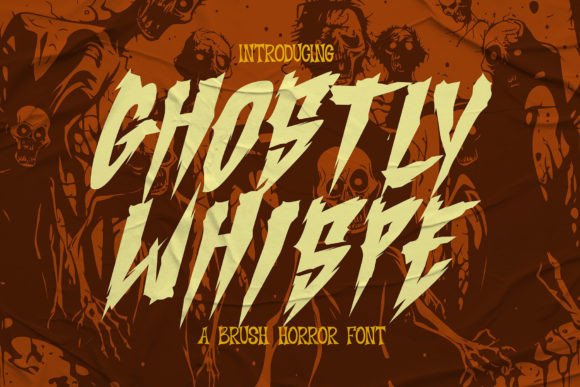
Ghoslty Whispe is not merely a standard serif or sans-serif with added texture. It is a brush horror font designed to mimic the erratic, frantic energy of a spectral presence. The defining characteristic of this typeface lies in its "hand-etched semblance," which creates a stark contrast between the ink density and the negative space. Unlike mechanical fonts that rely on uniform curves, Ghoslty Whispe utilizes disquieting, irregular strokes that suggest movement, decay, or the trembling hand of someone terrified.
This design philosophy results in a font that breathes life into static images. When applied to a project, the font does not simply sit on the page; it appears to emerge from the darkness, resembling an echo of a whisper. This quality makes it particularly effective for headlines, titles, and short bursts of text where the emotional impact is paramount. However, the very nature of its design—prioritizing atmosphere over uniformity—introduces specific considerations regarding readability and scalability that designers must weigh before committing to a full layout.
Visual Mechanics and Atmospheric Impact
The visual weight of Ghoslty Whispe is uneven by design. Some strokes are thick and heavy, suggesting the weight of fear, while others taper off into thin, fragile lines, evoking fragility or vanishing entities. This variation creates a dynamic tension that is difficult to achieve with rigid, geometric typefaces. In terms of atmospheric impact, the font excels at establishing a tone of nail-biting suspense immediately upon first glance. It bypasses the need for extensive imagery to set a mood, as the typography itself carries the narrative weight of the paranormal.
However, this high level of stylization comes with tradeoffs. Because the letterforms are so expressive, they can compete with other visual elements if not managed carefully. Designers must ensure that the background and accompanying graphics do not clash with the chaotic energy of the brush strokes. The font demands a certain amount of whitespace to allow the "whisper" effect to resonate, rather than getting lost in a cluttered composition.
Comparing Ghoslty Whispe to Alternative Styles
When evaluating typography for horror projects, Ghoslty Whispe occupies a specific middle ground between traditional gothic blackletter fonts and modern, clean digital serifs. To understand its utility, it is helpful to compare it against these broader categories.
Traditional Blackletter vs. Brush Horror: Classic blackletter fonts evoke a sense of ancient history, religion, and medieval dread. They are excellent for themes involving vampires, old-world curses, or religious horror. In contrast, Ghoslty Whispe feels more immediate and visceral. It suggests a contemporary threat or a psychological horror element rather than a historical one. If a project requires a feeling of age and tradition, a blackletter might be superior. If the goal is to induce a sudden, sharp spike of anxiety, the brush style of Ghoslty Whispe is likely the stronger choice.
Digital Cleanliness vs. Organic Decay: Many modern horror designs utilize clean, sans-serif fonts paired with high-contrast imagery to create a sterile, clinical horror (often seen in medical or sci-fi horror). These fonts prioritize maximum legibility. Ghoslty Whispe rejects this sterility entirely. Its organic, decaying look is better suited for supernatural, folk, or slasher themes where the environment feels untamed and dangerous. Choosing between a clean font and Ghoslty Whispe ultimately depends on whether the horror being portrayed is systematic and cold or chaotic and primal.
Functional Tradeoffs in Layouts
Beyond aesthetic preferences, there are functional differences to consider. Fonts like Ghoslty Whispe are generally best reserved for display purposes. Using them for body text can lead to eye strain and reduced comprehension due to the irregular spacing and stroke weights. In comparison, hybrid approaches often pair a bold display font like Ghoslty Whispe for headlines with a neutral sans-serif for supporting text. This combination allows the designer to leverage the eerie intrigue of the brush font without compromising the readability of the core message.
- Legibility at Small Sizes: Ghoslty Whispe may lose definition when scaled down significantly, making it unsuitable for fine print or small captions.
- Color Versatility: While the font works well in high-contrast scenarios (white on black), its intricate details can get muddy in low-contrast color palettes unless carefully adjusted.
- Language Support: As a highly stylized brush font, it may have limited character sets compared to standard system fonts, potentially restricting its use in multilingual projects.
Ideal Use Cases for Ghoslty Whispe
Identifying the right context is crucial for maximizing the effectiveness of any typeface. Ghoslty Whispe shines in scenarios where the primary goal is to convert a regular concept into something unsettling. It is particularly well-suited for converting standard invitations into spooky ones, transforming a simple event notice into a bone-chilling appeal.
Event Invitations and Posters
For Halloween parties, haunted house openings, or horror film screenings, the invitation serves as the first point of contact with the audience. Using Ghoslty Whispe here sets an expectation of fear before the guest even arrives. The font's ability to lend a sense of dread to social media graphics makes it a powerful tool for digital marketing campaigns surrounding these events. A poster featuring this font does not just announce an event; it promises an experience filled with suspense.
Branding and Packaging
In the commercial sector, products related to the paranormal, such as candle scents, mystery boxes, or horror-themed merchandise, benefit from the font's distinctive look. On packaging, Ghoslty Whispe can differentiate a product on a crowded shelf. Its hand-etched feel suggests a craft or artisanal quality, implying that the item contains something unique or forbidden. However, designers should exercise caution; the font should be used sparingly to maintain its impact. Overuse can dilute the brand's identity, making it appear gimmicky rather than genuinely eerie.
Decision Factors: When to Choose Another Option
Despite its strengths, Ghoslty Whispe is not a universal solution for all horror-related design needs. There are specific situations where alternative resources may yield better results.
If a project requires a long-form narrative or extensive text blocks, a more readable serif or slab-serif font is preferable. The disquieting design of Ghoslty Whispe is intended to stop the reader and make them pause, not to facilitate rapid reading. Similarly, if the target audience includes children or families looking for a lighthearted, "spooky but fun" Halloween vibe, the intense, ominous nature of this font might be too aggressive. In those cases, a rounded or playful horror font would be a more appropriate fit.
Furthermore, consider the medium of delivery. For digital interfaces where screen resolution varies, the fine details of a brush font can sometimes render poorly on lower-quality displays. In responsive web design, where text must scale fluidly across devices, a vector-based, cleaner font often ensures consistency. Ghoslty Whispe is best utilized in controlled environments like print media, high-resolution posters, or dedicated graphic assets where the designer has full control over the rendering quality.
Strategic Implementation Tips
To effectively integrate Ghoslty Whispe into a creative pursuit, consider the following practical strategies:
- Leverage Negative Space: Allow the font to breathe. Surround the text with ample dark space to enhance the feeling of isolation and whisper-like quality.
- Pair with Texture: Complement the brush strokes with grainy textures, fog overlays, or distressed backgrounds to unify the visual language.
- Limit Usage: Use the font exclusively for headlines, logos, or key phrases. Let the rest of the content remain neutral to guide the reader's eye naturally.
- Test Contrast: Ensure the color chosen for the font offers sufficient contrast against the background. Light gray on black, or white on deep purple, often enhances the spectral effect better than pure black on white.
Ultimately, the decision to use Ghoslty Whispe should be driven by the specific emotional response you wish to elicit from your audience. If the goal is to encapsulate the very embodiment of fear and the paranormal, its stark, hand-etched semblance provides a sublime fit. By understanding its limitations and comparing it thoughtfully against other typographic options, designers can harness its power to create compelling, spine-chilling visuals that resonate deeply with their intended audience.