Evaluating Modern Matilda: A Practical Guide to Chunky Handwritten Display Fonts
In the landscape of digital typography, finding a balance between approachability and professionalism is often the primary challenge for designers. Modern Matilda emerges as a specific solution within this niche, offering a chunky handwritten display style that aims to bridge the gap between casual expression and modern design standards. For professionals aged 20 to 50 who are tasked with selecting typefaces for branding, marketing materials, or editorial projects, understanding the specific utility of this font family is essential. It is not merely a decorative element but a functional tool that dictates the tone of communication.
The core appeal of Modern Matilda lies in its ability to look contemporary without feeling overly serious or sterile. In an era where corporate identity often leans heavily on geometric sans-serifs, a handwritten display font can inject necessary personality into a project. However, the decision to use such a distinct typeface requires a careful evaluation of its strengths, limitations, and how it compares to other stylistic approaches available in the current market.
Defining the Character of Modern Matilda
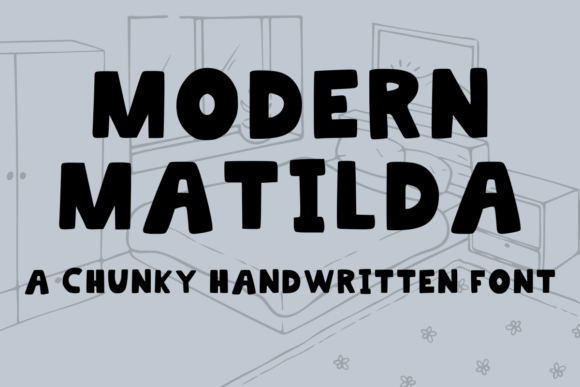
To understand where Modern Matilda fits within a design system, one must first analyze its structural characteristics. The font is defined by its "chunky" weight and irregular stroke widths, mimicking the natural variance found in hand-lettering. Unlike standard handwriting fonts that often appear thin or scratchy, this typeface utilizes bold strokes that ensure high legibility even at smaller sizes or when used against complex backgrounds.
Each letter in the set is designed to be unique enough to stand out, avoiding the robotic repetition common in many generated scripts. This uniqueness contributes to a polished yet organic feel. The design intent is clear: to provide a visual texture that suggests human creativity while maintaining the consistency required for professional applications. This makes it particularly effective for headlines, logos, and short-form copy where impact is more critical than body text readability.
The Distinction of the Extra Variant
A critical component of the Modern Matilda family is the inclusion of the Modern Matilda Extra variant. While it shares the same core structural DNA as the original, the Extra version introduces a playful squiggle to the glyphs. This subtle addition fundamentally shifts the tone of the font from "modern and friendly" to "quirky and energetic."
This variation serves a specific purpose in the designer's toolkit. It allows for a single font family to cover a broader range of emotional tones without requiring the user to source multiple different typefaces. For projects that demand a higher degree of whimsy—such as children's book covers, party invitations, or creative agency portfolios—the Extra variant offers a level of expressiveness that the standard version might lack. Conversely, for projects requiring a touch of playfulness but needing to retain a grounded aesthetic, the standard Modern Matilda remains the superior choice.
Comparative Analysis: Modern Matilda vs. Traditional Scripts
When evaluating Modern Matilda, it is helpful to compare it against traditional script categories. Classic calligraphy fonts often rely on extreme contrast between thick and thin lines and feature elaborate swashes. While beautiful, these fonts can struggle with legibility in digital environments and may convey a sense of formality or antiquity that clashes with modern brand identities.
In contrast, Modern Matilda adopts a more uniform weight distribution. This "chunky" quality aligns it closer to brush-script styles rather than fine-point calligraphy. The trade-off here is a loss of delicate elegance in exchange for robustness and clarity. Where a traditional script might fail on a mobile screen or a dark background, Modern Matilda maintains its integrity. This makes it a more versatile option for multi-channel campaigns where consistency across print and digital media is paramount.
Furthermore, compared to minimalist sans-serif fonts, Modern Matilda offers a significant advantage in establishing an immediate emotional connection. Sans-serifs are excellent for neutrality and information density, but they rarely evoke a sense of warmth or individuality on their own. By pairing a neutral sans-serif for body text with Modern Matilda for headers, designers can create a hierarchy that guides the reader through both the logic and the emotion of the content.
Strategic Use Cases and Limitations
Determining when to deploy Modern Matilda requires an honest assessment of the project goals. The font excels in scenarios where the message needs to feel personal, accessible, and inviting. It is well-suited for lifestyle brands, boutique businesses, educational resources, and social media graphics. Its polished nature ensures that even in a commercial context, the design does not appear amateurish.
However, there are clear situations where this font may not be the right fit. Due to its display nature and irregular forms, Modern Matilda is generally not recommended for long-form body text. Reading large blocks of text in a chunky handwritten style can cause eye strain and reduce comprehension speed. Additionally, projects that require a strictly formal, authoritative, or scientific tone should avoid this typeface, as its inherent playfulness could undermine the seriousness of the subject matter.
Another limitation to consider is the availability of language support. Many specialized display fonts focus primarily on Latin characters. If a project requires extensive multilingual support, including non-Latin scripts or special diacritics, the designer must verify the character set coverage before committing to Modern Matilda. In cases where broad linguistic compatibility is a priority, a more standard font family might offer fewer logistical hurdles.
Decision Factors for Selecting the Right Variant
For those deciding between the standard Modern Matilda and the Extra variant, the decision should hinge on the desired level of quirkiness. The standard version is ideal for projects that need to stand out but still adhere to a relatively structured visual language. It works well for branding that wants to signal "modern" and "creative" without crossing into "childish."
The Extra variant, with its added squiggles, is best reserved for contexts with more freedom to be experimental. It is perfect for limited-time promotions, event flyers, or sub-brands that are meant to be distinctly different from the parent company's main identity. Using the Extra version for a primary logo might limit future scalability if the brand needs to mature or pivot toward a more serious direction later on.
Designers should also consider the color palette and layout complexity. Because Modern Matilda has significant visual weight, it pairs best with ample white space and clean layouts. Overcrowding the design with too many competing elements can negate the font's polished appearance. Similarly, while the font handles bold colors well, using it in very light pastel shades on light backgrounds may reduce legibility due to the ink spread effect inherent in its design.
Final Considerations for Implementation
Ultimately, the value of Modern Matilda lies in its versatility within the display category. It offers a middle ground that satisfies the need for personality without sacrificing the polish required for professional presentation. When integrated thoughtfully, it can elevate a design from generic to memorable.
However, like any tool, its effectiveness depends on the user's judgment. It is not a universal solution for every design problem. By carefully weighing the project's tone, audience expectations, and technical requirements, designers can determine if Modern Matilda or its Extra counterpart is the appropriate choice. For those seeking a font that balances modern aesthetics with a human touch, it represents a strong contender worth exploring alongside other options in the portfolio.