Old Skull 2.0: The Evolution of Vintage Typography for Modern Creative Workflows
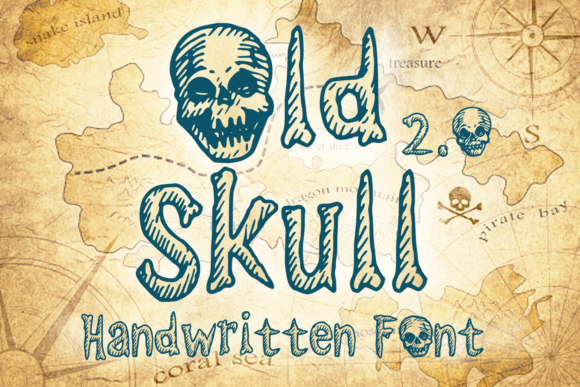
In the rapidly evolving landscape of digital design, there is a persistent and powerful counter-movement toward authenticity. As artificial intelligence generates endless streams of sterile, perfect imagery, designers and creators are increasingly seeking textures that feel human, imperfect, and hand-crafted. At the forefront of this resurgence is Old Skull 2.0, a vintage skull-themed hand-drawn display font that has captured the imagination of professionals across the globe. This is not merely an update to a typeface; it represents a significant shift in how we approach visual storytelling in a saturated market.
The original Old Skull was beloved for its quirky charm, but Old Skull 2.0 elevates the concept by addressing a critical gap in the global creative economy: multilingual versatility. By expanding its character set to include English, French, German, Italian, and Spanish, this new version transforms from a niche novelty into a robust tool for international branding and communication. For freelancers, entrepreneurs, and marketing agencies, this expansion means that the distinct aesthetic of hand-drawn typography can now be seamlessly integrated into campaigns targeting diverse linguistic markets without sacrificing stylistic integrity.
The Shift Toward Human-Centric Design in a Digital Age
To understand why Old Skull 2.0 is generating such significant attention, one must look at the broader trends shaping the creative industry. We are currently witnessing a departure from the "flat design" era that dominated the early 2010s. Today's consumers crave depth, history, and personality. They respond to brands that feel like they were built by people, for people. In this context, the hand-drawn nature of Old Skull 2.0 is not just a stylistic choice; it is a strategic asset.
The font embodies the "imperfect perfection" that defines modern lifestyle branding. Whether used on a streetwear t-shirt or a boutique greeting card, the slight irregularities in the letterforms signal authenticity. In an era where digital assets can often feel cold and manufactured, the organic lines of Old Skull 2.0 provide a tactile quality that resonates with audiences seeking genuine connection. This aligns with the growing consumer preference for artisanal goods and experiences, bridging the gap between digital convenience and analog warmth.
Bridging Markets with Multilingual Capabilities
The most transformative aspect of this release is its expanded language support. Historically, display fonts with complex illustrations or specific thematic elements—like the iconic skull motif—were often limited to the Latin alphabet used in English. This limitation forced designers to compromise, often pairing a unique headline font with a generic body font when working on projects for French, German, Italian, or Spanish-speaking audiences.
Old Skull 2.0 eliminates this friction. By natively supporting these major European languages, it empowers creators to maintain a cohesive brand identity across borders. Imagine a fashion label launching a collection in Berlin, Paris, and Madrid simultaneously. With previous iterations, maintaining the same edgy, vintage vibe would have been difficult. Now, marketers can deploy the exact same typographic voice, ensuring that the emotional impact of the design remains consistent regardless of the viewer's native tongue. This capability is crucial for small businesses and independent creators who wish to scale their operations globally without the overhead of commissioning custom localized artwork.
Practical Applications Across Industries
The versatility of Old Skull 2.0 extends far beyond simple text replacement. Its design language is adaptable enough to serve as the cornerstone for various creative projects, ranging from commercial merchandise to personal artistic endeavors. Let us explore how different sectors are leveraging this tool to meet changing consumer expectations.
Fashion and Merchandise
In the apparel industry, particularly within the streetwear and casual segments, typography is often the primary graphic element. Old Skull 2.0 offers a perfect balance of edginess and playfulness. It avoids the aggression of traditional gothic fonts while retaining a rebellious spirit. Designers are using it for t-shirts, hoodies, and tote bags to create pieces that appeal to a younger demographic that values individuality. The hand-drawn style suggests a DIY ethos, which is highly prized in contemporary fashion culture. When applied to fabric, the font’s organic strokes mimic screen-printed aesthetics, adding a layer of perceived value and craftsmanship to mass-produced items.
Publishing and Children’s Literature
Perhaps one of the most unexpected yet effective applications is in children’s book design. While skulls might seem daunting at first glance, the specific execution in Old Skull 2.0 is whimsical rather than macabre. It fits perfectly into genres that blend adventure with a touch of spookiness, such as Halloween-themed stories or fantasy adventures. The font’s legibility, despite its decorative nature, ensures that it works well for chapter headings or pull quotes, guiding young readers through the narrative without causing visual fatigue. Furthermore, the inclusion of multiple languages opens doors for publishers looking to create educational materials that teach vocabulary in a fun, engaging way across different cultures.
Stationery and Greeting Cards
The stationery market has seen a renaissance driven by the desire for personalized, physical connections. Old Skull 2.0 brings a unique flair to greeting cards, invitations, and stickers. For events like birthday parties, Halloween celebrations, or even unconventional wedding themes, this font provides a distinctive voice. It allows event planners and stationery designers to move away from clichéd scripts and bold sans-serifs, offering something that feels curated and bespoke. The ability to write messages in French, Italian, or Spanish directly within the font makes it an invaluable resource for creating multicultural greeting lines that feel authentic rather than translated.
Optimizing Creative Workflows
For professionals managing tight deadlines and complex client requirements, efficiency is paramount. One of the hidden benefits of Old Skull 2.0 is how it streamlines the localization process. In the past, adapting a design for a new market might have required hiring a local illustrator to recreate the logo or headline in a matching style. This was time-consuming and expensive. Now, a single font file handles the heavy lifting.
This integration into standard design workflows means that freelancers and in-house teams can iterate faster. A marketer can draft a poster in English, then instantly switch the text to German or Spanish to test different campaign angles, all while maintaining the exact same visual hierarchy and emotional tone. This agility is essential in today's fast-paced digital environment, where the ability to pivot and localize content quickly can determine the success of a launch.
Building Brand Identity with a Casual Touch
There is a growing trend among startups and lifestyle brands to adopt a "casual" tone. This does not mean unprofessional; rather, it implies approachability and relatability. Old Skull 2.0 serves as an excellent vehicle for this strategy. Its hand-drawn aesthetic breaks down barriers between the brand and the consumer. It signals that the company is human, creative, and perhaps a bit unconventional.
Whether used on a website header, social media graphics, or packaging, the font invites interaction. It encourages viewers to pause and appreciate the detail, fostering a deeper engagement with the brand message. In a crowded marketplace where consumers are bombarded with polished, corporate messaging, the slightly rough edges of Old Skull 2.0 act as a beacon of personality.
Looking Forward: The Future of Thematic Typography
As we look toward the future of design, the success of updates like Old Skull 2.0 signals a clear direction: specialization combined with inclusivity. The market no longer rewards generic tools; it rewards those that offer unique voices while remaining accessible to a global audience. The fusion of a strong thematic identity (the vintage skull) with practical utility (multilingual support) sets a new standard for what display fonts should aspire to be.
Creators who embrace this evolution will find themselves better equipped to tell compelling stories that resonate across cultural boundaries. By choosing tools that respect both the art of design and the reality of a connected world, professionals can build brands that are not only visually striking but also culturally relevant. Old Skull 2.0 is more than just a font; it is a testament to the enduring power of human creativity in the digital age, proving that even the oldest motifs can be reinvented for a new generation of storytellers.
As you consider your next project, whether it is a line of stickers, a series of posters, or a comprehensive rebranding effort, remember that the right typography can define the entire experience. Fall in love with the incredibly versatile style of Old Skull 2.0 and use it to create lovely designs that stand out in a sea of sameness. The tools are here, the languages are supported, and the opportunity to make your mark is waiting.