Evaluating Ghostbum: A Classic Horror Typeface
In the realm of digital typography, few categories evoke as immediate a reaction as horror fonts. These typefaces are designed not merely to convey information but to establish an atmosphere of dread, suspense, and unease. Among the newer entries in this specific niche is Ghostbum, a font family explicitly inspired by the aesthetic of 1970s horror movie posters. For designers, authors, and content creators seeking to replicate that specific era's visual language, understanding the capabilities and limitations of Ghostbum is essential before integrating it into a project.
Understanding the Design Philosophy of Ghostbum
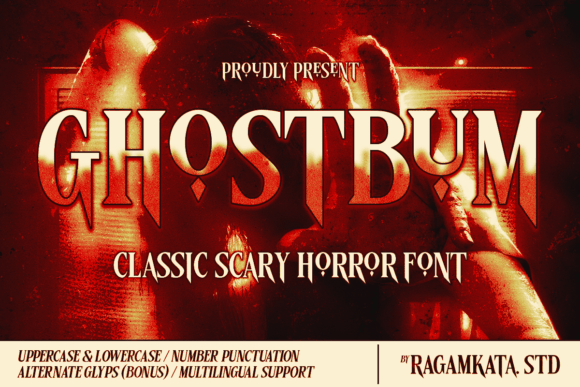
Ghostbum is characterized by its sharp serifs and elongated vertical proportions. This design choice is not arbitrary; it mirrors the typographic trends of the late 1960s and early 1970s, a period when horror cinema shifted from Gothic monsters to psychological thrillers and slasher films. The font's structure relies on high contrast between thick and thin strokes, creating a sense of tension within the letterforms themselves. The elongation mimics the stretching often seen in vintage title sequences, suggesting something unnatural or distorted.
A defining feature of Ghostbum is its inclusion of alternate characters. In typography, alternates allow for variation in repeated letters, preventing a monotonous appearance and adding a layer of hand-crafted irregularity. In the context of a horror font, these alternates can introduce subtle "glitches" or variations that feel organic and unsettling, rather than mechanically perfect. The font is available in two primary styles: Regular and Outline. The Regular style provides solid, impactful text suitable for headlines, while the Outline style offers a hollowed effect that can be filled with textures, gradients, or background images, a technique frequently used in poster design to create depth.
Reasons to Consider Ghostbum for Your Projects
There are several practical reasons why a designer might select Ghostbum over other options in the horror category. The primary driver is usually the need for historical accuracy. If a project requires a visual identity that feels authentic to the 1970s—such as a retro-themed Halloween event, a period-specific film restoration, or a book cover for a novel set in that decade—Ghostbum offers a direct stylistic match without requiring extensive manual modification.
Furthermore, the versatility provided by the two included styles allows for flexible hierarchy in design. A common layout strategy involves using the Regular weight for the main title and the Outline weight for subtitles or secondary text, creating a cohesive yet dynamic look. The sharp serifs also ensure that the font retains legibility at larger sizes, which is crucial for movie titles and large-format prints where the text must command attention from a distance.
Benefits and Practical Advantages
- Atmospheric Consistency: The font immediately signals "horror" to the viewer, reducing the need for excessive imagery to set the mood.
- Design Efficiency: With built-in alternates and dual weights, designers can achieve complex looks without needing to edit individual glyphs in vector software.
- Nostalgic Appeal: It taps into the growing trend of retro aesthetics, appealing to audiences familiar with classic cinema.
Tradeoffs and Considerations
While Ghostbum excels in specific contexts, it is not a universal solution for all text-based needs. The very features that make it effective for headlines—the sharp serifs, extreme elongation, and decorative alternates—can become liabilities in other scenarios. The most significant tradeoff is legibility at smaller sizes. Because the design relies on fine details and high contrast, shrinking the font for body copy or small print can result in broken lines and poor readability. This makes Ghostbum unsuitable for long-form reading materials such as novels, articles, or website navigation menus.
Additionally, the distinct 1970s style may clash with modern, minimalist design trends. If a project aims for a sleek, contemporary horror aesthetic (often associated with cleaner sans-serif fonts), Ghostbum might feel too dated or cluttered. The outline style, while versatile, requires careful handling regarding background colors; if placed against a busy or similarly colored background, the hollowed text may disappear entirely unless a stroke or fill is applied.
Situations Where Ghostbum Is a Strong Fit
Ghostbum performs best when the goal is to create a strong, singular visual impact. It is an ideal choice for:
- Movie Titles and Posters: Its dramatic flair is perfectly suited for the large-scale text found on theatrical posters and streaming service banners.
- Book Covers: Specifically for thrillers, mysteries, or horror novels that aim to evoke a classic literary feel.
- Halloween Marketing Materials: Flyers, invitations, and social media graphics where the theme is overtly spooky and retro-inspired.
- Album Art: For bands playing horror punk, psychedelic rock, or metal genres that draw inspiration from vintage aesthetics.
In these scenarios, the font acts as the primary visual anchor. The elongated design draws the eye upward, guiding the viewer through the composition, while the sharp serifs add a touch of elegance that elevates the design above generic "scary" clip art.
When Alternatives May Be Worth Considering
Despite its strengths, there are clear situations where selecting a different typeface would be more prudent. If the project involves a significant amount of body text, a serif font with standard proportions or a clean sans-serif should be chosen instead to ensure accessibility and readability. Similarly, if the target audience is looking for a modern, digital-native horror vibe—think cyberpunk horror or psychological tech-thrillers—Ghostbum's vintage roots may work against the desired tone.
Designers working on mobile-first applications should also exercise caution. On small screens, the intricate details of Ghostbum may not render clearly, potentially leading to a poor user experience. In such cases, a simpler, bolder display font with fewer decorative elements would serve the functional requirements better.
Decision-Making Insights for Designers
When deciding whether to integrate Ghostbum into a workflow, the decision should hinge on the intended message and the medium of delivery. Ask whether the design requires a specific historical reference. If the answer is yes, and that reference is the 1970s horror genre, Ghostbum is a highly efficient tool. However, if the goal is simply to say "scary" without a specific time period, exploring a broader range of horror fonts might yield a more unique result.
It is also important to consider the pairing strategy. Ghostbum works well when paired with simple, neutral fonts for supporting text. Using it alongside another highly decorative font can create visual chaos. By treating Ghostbum as a headline-only element and reserving standard fonts for informational content, designers can leverage its atmospheric power without compromising the overall usability of the design.
Ultimately, Ghostbum is a specialized tool designed for a specific aesthetic niche. It captures the suspense and elegance of classic horror effectively, offering a timeless charm for those who understand its constraints. For projects demanding a retro-horror identity, it provides a robust foundation. For general-purpose design or modern minimalism, however, its stylized nature suggests that alternatives may better align with the project's goals.